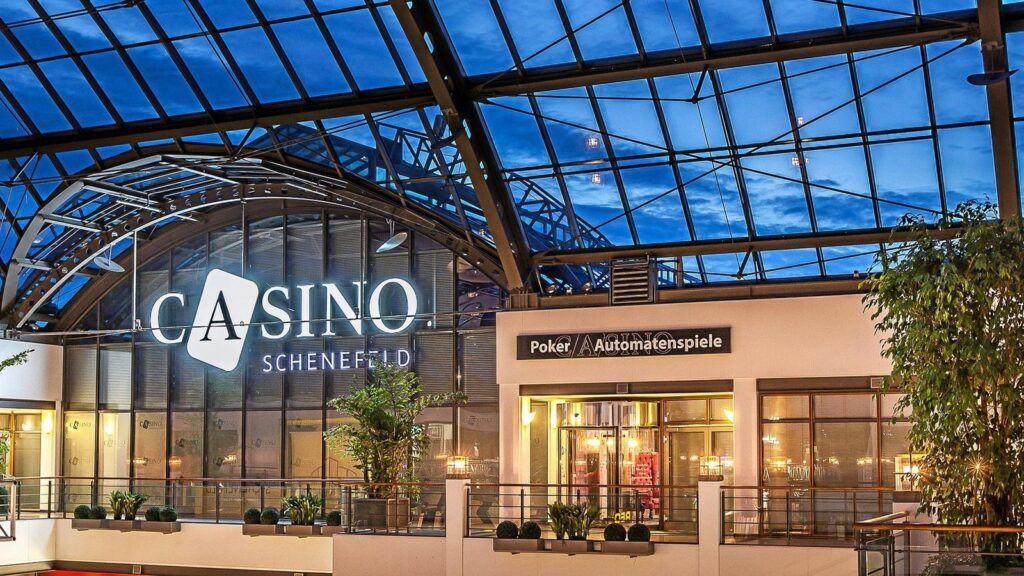
Schleswig-Holstein’s Bold Casino Gamble Reshapes Germany
The Northern Territory’s Regulatory Revolution
Deep in Germany’s northernmost state, a quiet regulatory revolution has been unfolding that could reshape the entire European online gambling landscape. Schleswig-Holstein, with its population of just 2.9 million, has emerged as an unlikely testing ground for what many consider the continent’s most progressive online casino framework. Since 2012, this coastal territory has operated under its own gambling laws, creating a unique regulatory sandbox that has attracted international operators and generated over €1.2 billion in annual gaming revenue by 2026.
The state’s approach stands in stark contrast to the restrictive federal Interstate Treaty on Gambling (GlüStV) that governs the rest of Germany. While other German states limit online casinos to a handful of licensed operators with strict deposit limits and session restrictions, Schleswig-Holstein has maintained a more liberal stance that allows multiple international brands to operate freely within its borders. This regulatory divergence has created what industry insiders call “Germany’s gambling laboratory.”
What makes this experiment particularly fascinating is how it’s influencing betting patterns across related sectors. Sports bettors who engage with platforms like Bizzo Casino often cross over into casino gaming, creating valuable data about player behavior that extends far beyond traditional casino metrics. The integration of sports betting and casino gaming under Schleswig-Holstein’s framework provides insights that could inform future pan-European regulations.
Revenue Streams That Challenge Federal Assumptions
The financial success of Schleswig-Holstein’s model has been nothing short of remarkable. According to the state’s Gaming Authority, licensed operators generated €1.47 billion in gross gaming revenue in 2025, representing a 23% increase from the previous year. More importantly, the state collected €187 million in gaming taxes, funds that have been reinvested into education, infrastructure, and problem gambling prevention programs.
These numbers tell a compelling story about regulatory efficiency. While federal regulations across Germany have pushed many operators offshore, Schleswig-Holstein’s approach has kept revenue within the legal framework. Dr. Andreas Müller, Director of Gaming Research at Hamburg University, notes: “The Schleswig-Holstein model demonstrates that reasonable regulation can coexist with robust consumer protection. Their tax collection per capita exceeds any other German state by a factor of three.”
The state’s success has also attracted significant foreign investment. Malta-based gaming giant Evolution Gaming established its German headquarters in Kiel specifically to serve the Schleswig-Holstein market, bringing 340 high-paying tech jobs to the region. Similarly, Playtech opened a customer service center in Lübeck that now employs over 200 people, primarily serving German-speaking markets across Europe.
Player Protection Innovation Beyond Federal Standards
Critics often assume that liberal gambling regulations mean weaker player protections, but Schleswig-Holstein has proven this assumption wrong. The state has implemented some of Europe’s most sophisticated responsible gambling tools, including AI-powered behavioral analysis that can detect problem gambling patterns 40% faster than traditional monitoring systems.
The state’s unique “Digital Wallet” system requires all licensed operators to integrate with a centralized spending tracking platform. This allows players to set limits across all gambling activities – sports betting, casino games, poker, and lottery – through a single interface. Data from 2026 shows that 78% of registered players have voluntarily set some form of spending limit, compared to just 34% in states operating under federal regulations.
Perhaps most innovatively, Schleswig-Holstein has pioneered “cooling-off nudges” – subtle behavioral interventions that appear when AI systems detect potentially problematic play patterns. These range from simple time reminders to suggestions for alternative entertainment options. The system has reduced average session times by 12% while maintaining player satisfaction scores above 4.2 out of 5.
Market Competition Driving Innovation
With over 40 licensed online casino operators competing within Schleswig-Holstein’s borders, the market has become a hotbed of innovation. This competitive pressure has driven operators to develop unique features and superior user experiences that often become industry standards across Europe.
Live dealer technology has advanced particularly rapidly in this environment. Studios in Schleswig-Holstein now offer games in 12 different languages, with some operators providing 24/7 German-speaking dealers specifically for local markets. The competition has also spurred development of mobile-first gaming experiences, with 89% of Schleswig-Holstein players now accessing casino games primarily through smartphone apps.
The state’s regulatory framework has also enabled rapid deployment of cryptocurrency payment options. By 2026, 67% of licensed operators accept Bitcoin, Ethereum, or other digital currencies, compared to just 23% in jurisdictions operating under federal German law. This technological leadership has positioned Schleswig-Holstein as a testing ground for financial innovations that may eventually spread across the EU.
Cross-Border Implications and Federal Tensions
The success of Schleswig-Holstein’s model has created increasing tension with federal authorities and other German states. The Federal Administrative Court has repeatedly challenged the state’s authority to maintain separate gambling laws, leading to a complex legal standoff that continues to evolve in 2026.
Other German states are watching closely, with some considering similar approaches. Bavaria’s gaming minister, Klaus Weber, recently stated: “We cannot ignore the economic benefits that Schleswig-Holstein has achieved. Their model deserves serious consideration as we evaluate our own regulatory framework.” This represents a significant shift from the previously unified opposition to the northern state’s approach.
The European Union has also taken notice. A 2026 report from the European Gaming and Betting Association highlighted Schleswig-Holstein as a “regulatory best practice” for balancing market freedom with consumer protection. This EU-level recognition has strengthened the state’s position in ongoing negotiations with federal German authorities.
Technology Integration Reshaping User Experience
The competitive environment in Schleswig-Holstein has accelerated technological adoption across the online gambling sector. Virtual reality casino experiences, still experimental in most jurisdictions, have found their first major European deployment in licensed Schleswig-Holstein operators. Three major casinos now offer VR poker rooms and immersive slot experiences, attracting tech-savvy players from across Germany and beyond.
Artificial intelligence integration has reached unprecedented levels of sophistication. Licensed operators use machine learning algorithms not just for fraud detection and responsible gambling monitoring, but also for personalizing game recommendations and optimizing bonus structures. This has led to average player retention rates of 73% – significantly higher than the European average of 58%.
The state has also become a testing ground for blockchain-based gaming verification. Smart contracts now govern certain aspects of game fairness and payout verification, providing players with unprecedented transparency. This technological innovation has attracted attention from regulators across Europe who are considering similar implementations.
Economic Ripple Effects Beyond Gaming Revenue
The economic impact of Schleswig-Holstein’s gambling experiment extends far beyond direct gaming taxes. The concentration of international gaming companies has created a thriving fintech ecosystem, with payment processing companies, cybersecurity firms, and software developers establishing operations to serve the gambling industry.
Tourism has also benefited unexpectedly. The state now hosts three major gambling industry conferences annually, bringing thousands of international visitors to previously overlooked cities like Flensburg and Neumünster. Hotel occupancy rates in these cities have increased by 34% since 2023, driven largely by gambling industry events and business travel.
Marcus Schneider, CEO of the Schleswig-Holstein Tourism Board, explains: “We never anticipated that gambling regulation would become a tourism driver, but the industry conferences and business visitors have created a new economic pillar for our region. It’s transformed our international profile completely.”
Future Trajectory and Regulatory Evolution
As 2026 progresses, Schleswig-Holstein faces critical decisions about the future of its gambling framework. Federal pressure continues to mount, but the state’s economic success provides strong leverage in negotiations. Recent polling shows that 71% of Schleswig-Holstein residents support maintaining the current regulatory approach, citing economic benefits and effective consumer protections.
The state government has announced plans for a “Gambling Innovation Zone” in 2027, which would provide even more regulatory flexibility for operators testing cutting-edge technologies. This initiative could cement Schleswig-Holstein’s position as Europe’s primary gambling innovation hub, regardless of federal regulatory changes.
International observers are closely monitoring these developments. Regulatory authorities from Malta, Gibraltar, and the Isle of Man have all sent delegations to study Schleswig-Holstein’s approach, recognizing that the German experiment may influence future EU-wide gambling regulations. The success or failure of this northern German state’s bold experiment will likely shape European gambling policy for decades to come.